


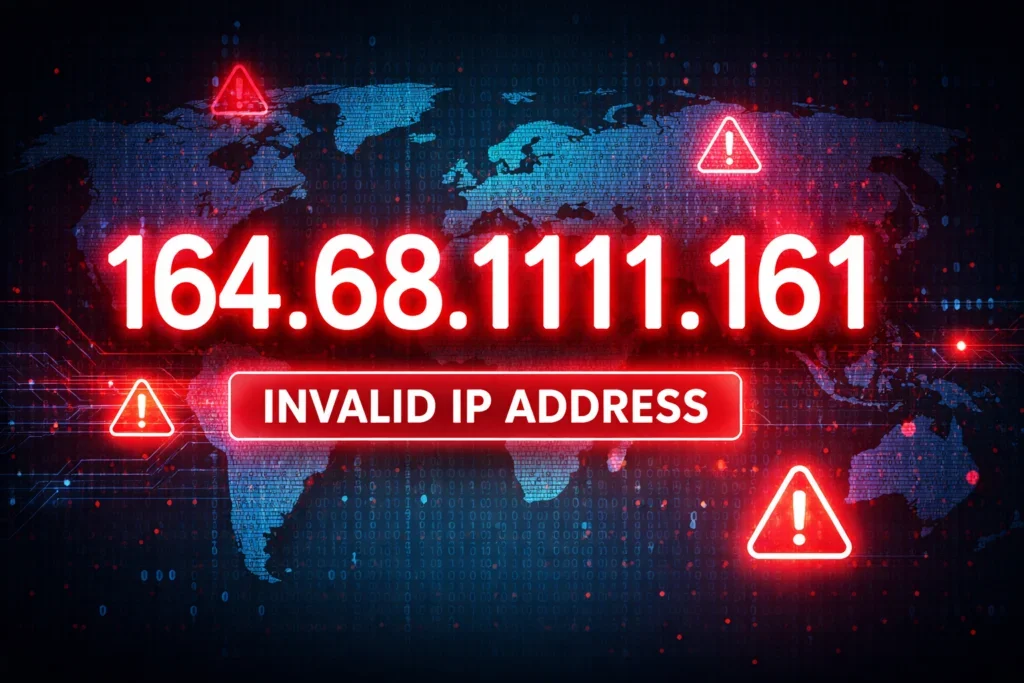
The keyword 164.68.1111.161 appears to resemble an IP address, which is a fundamental component of how the internet functions. IP addresses allow devices to communicate with each other across networks. However, not every string of numbers separated by dots qualifies as a valid IP.
In this article, we will explore what 164.68.1111.161 represents, whether it is valid, how IP addresses work, and why understanding them is important for
What is 164.68.1111.161?
At first glance, 164.68.111.161 looks like a standard IPv4 address. IPv4 addresses consist of four sets of numbers separated by dots, and each number must range between 0 and 255.
However, the segment “1111” in 164.8.1111.161 exceeds this range, which immediately raises a red flag. This means that:
- It is not a valid IPv4 address
- It may be a mistyped or malformed IP
- It could appear in error logs or misconfigurations
Understanding this distinction is crucial for developers, IT professionals, and SEO experts.
Structure of IPv4 and Why 164.68.111.161 Fails
To better understand why this keyword is problematic, let’s break down the structure of a valid IP:
- IPv4 format:
X.X.X.X - Each X must be between 0 and 255
Example of valid IP:
- 164.68.111.161 ✔️
Invalid example:
- 164.68.1111.161 ❌
Key Issue:
The number 1111 exceeds the allowed limit, making the entire address invalid.
Why 164.68.1111.61 Appears in Searches
You might be wondering why people search for 164.68.1111.161 if it’s not valid. There are several reasons:
1. Typographical Errors
Users often mistype IP addresses, especially when entering them manually.
2. Log File Confusion
Sometimes, server logs may display malformed entries due to bugs or incorrect parsing.
3. SEO Curiosity
Some keywords gain traction simply because users are trying to understand unusual or confusing data.
4. Malware or Bot Activity
Invalid IPs can sometimes appear in logs generated by bots or malicious scripts.
How IP Addresses Work in Networking
Even though 164.68.1111.161 is invalid, it helps to understand how real IP addresses function.

Core Functions of IP Addresses:
- Identify devices on a network
- Enable communication between servers and users
- Help route data efficiently across the internet
Every website you visit relies on IP addresses behind the scenes.
164.68.1111.161 and SEO Implications
You might not expect IP addresses to impact SEO, but they actually play an indirect role.
1. Server Location
Search engines consider server location when determining relevance.
2. Website Speed
IP-based routing affects load time, which is a ranking factor.
3. Shared Hosting Risks
Bad neighbors on the same IP can affect your site reputation.
4. Crawl Errors
Invalid IPs like 164.68.1111.161 in logs can signal technical issues.
Common Errors Related to 164.68.1111.161
If you encounter 164.68.1111.161, it could indicate several issues:
Misconfigured DNS
Incorrect DNS entries may produce malformed IPs.
Software Bugs
Applications generating logs may output incorrect formats.
User Input Mistakes
Manual entry errors are very common.
Parsing Failures
Systems reading IP data may misinterpret strings.
How to Fix Issues Like 164.68.1111.161
If you find this keyword appearing in your system, here are steps to resolve it:
1. Validate Input Fields
Ensure all IP entries follow correct formatting rules.
2. Use Regex Filtering
Apply validation patterns to block invalid IPs.
3. Check Server Logs
Look for repeated occurrences and identify patterns.
4. Update Software
Outdated tools may produce formatting errors.
5. Monitor Traffic
Detect whether bots are generating these entries.
Security Concerns Around Invalid IPs
Although 164.68.1111.161 is not valid, it may still raise security concerns.
Potential Risks:
- Bot traffic masking identity
- Injection attacks using malformed data
- Log pollution for hiding real threats
Prevention Tips:
- Use firewalls
- Implement input validation
- Monitor unusual traffic behavior
Difference Between IPv4 and IPv6
While discussing 164.68.1111.161, it’s helpful to understand newer IP formats.
IPv4:
- Example: 192.168.1.1
- Limited to ~4.3 billion addresses
IPv6:
- Example: 2001:0db8:85a3::8a2e:0370:7334
- Supports trillions of addresses
Invalid entries like 164.68.1111.161 don’t fit either format.
Tools to Validate IP Addresses
To avoid issues like 164.68.1111.161, use these tools:
- Online IP validators
- Command-line tools (ping, nslookup)
- Network monitoring software
These tools ensure accuracy and prevent errors.
164.68.1111.161 in Server Logs
When analyzing logs, you might encounter strange entries like 164.68.1111.161.
What It Could Mean:
- Corrupted data
- Automated script errors
- Fake traffic entries
What To Do:
- Filter invalid IPs
- Focus on valid traffic
- Use analytics tools for clarity
Best Practices for Handling IP Data
To avoid problems similar to 164.68.1111.161, follow these best practices:
1. Always Validate Data
Never trust raw input without checking.
2. Normalize Formats
Ensure consistent IP representation.
3. Log Efficiently
Store only useful and accurate data.
4. Monitor Regularly
Detect anomalies early.
Impact of Incorrect IPs on Websites
Using or encountering invalid IPs like 164.68.1111.161 can affect:
- Website functionality
- Server communication
- Security systems
- Analytics accuracy
Even small errors can create bigger technical issues.
Why Understanding 164.68.1111.161 Matters
Although it is not a valid IP, studying 164.68.1111.161 helps in:
- Learning IP validation rules
- Improving system security
- Enhancing SEO technical audits
- Debugging network issues
It serves as a practical example of what can go wrong.
Future of IP Addressing
With the growth of the internet, IP systems continue to evolve.
Trends Include:
- Increased adoption of IPv6
- Better validation tools
- AI-based traffic monitoring
- Enhanced cybersecurity systems
Invalid formats like 164.68.1111.161 will become easier to detect automatically.
Conclusion
The keyword 164.68.1111.161 may look like a standard IP address, but it is actually an invalid format due to one segment exceeding the allowed range. Despite this, it provides a valuable learning opportunity for understanding how IP addresses work, how errors occur, and how they impact SEO and security.
By applying proper validation, monitoring systems, and best practices, you can avoid issues related to malformed IPs and ensure smooth network operations.
Final Thoughts
Whether you’re a beginner or an experienced professional, recognizing invalid entries like 164.68.1111.161 is essential. It not only improves your technical knowledge but also strengthens your website’s performance and security.
